C'est vs Il est: The One Rule That Decides It
C'est or il est? The rule: c'est + a noun with an article (c'est un médecin), il/elle est + a bare adjective or profession (il est médecin, il est grand).
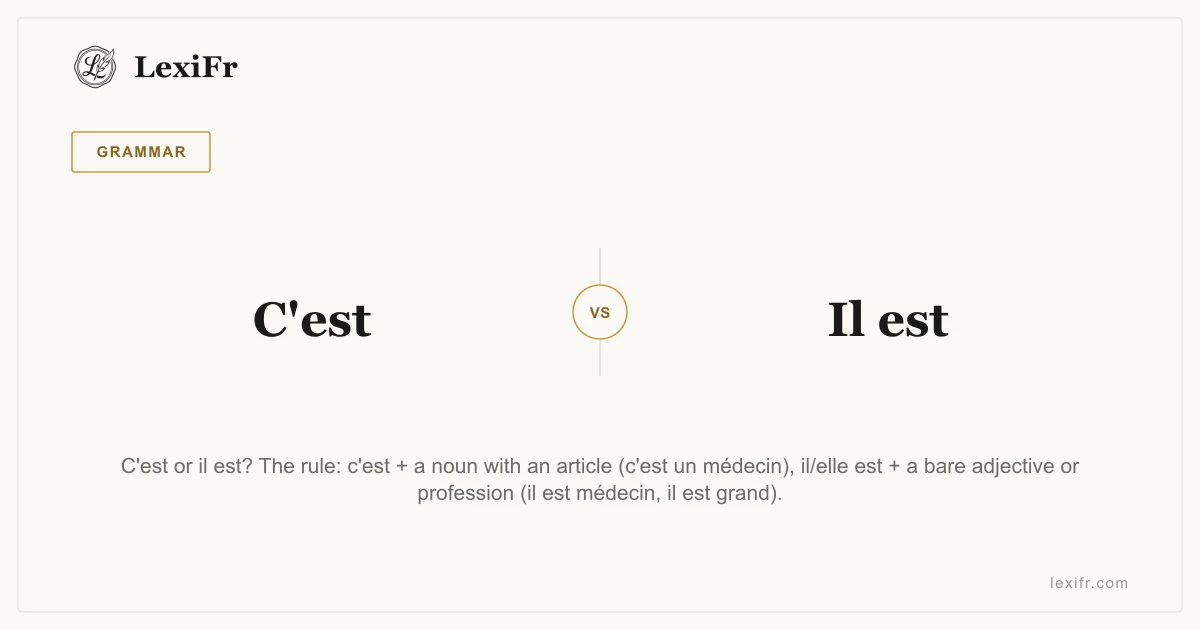
Use c’est before a noun with an article - c’est un médecin, c’est une bonne idée. Use il est or elle est before a bare adjective or unmodified profession - il est grand, il est médecin. The quick test: if a determiner like un, une or le follows, it’s c’est; otherwise, il/elle est.
Quick answer
Use c’est before a noun with an article - c’est un médecin, c’est une bonne idée. Use il est or elle est before a bare adjective or unmodified profession - il est grand, il est médecin. The quick test: if a determiner like un, une or le follows, it’s c’est; otherwise, il/elle est.
Master this classic French distinction with clear French audio. Get it on the App Store or Google Play.
Side-by-side comparison table
| C’est (+ article/noun) | Il/elle est (+ bare adjective/profession) |
|---|---|
| c’est un médecin | il est médecin |
| c’est une bonne idée | elle est intelligente |
| c’est mon frère | il est grand |
C’est + noun (with article): identification
C’est un médecin, c’est une bonne idée, c’est mon frère - always paired with an article or determiner: un/une/le/la/mon.
Il/elle est + adjective or bare profession: description
Il est grand, elle est intelligente, and crucially: il est médecin - NO article before the bare profession here.
The trap: professions can go either way
Il est médecin (bare, description) vs c’est un médecin (with article, identification) - both fully correct, just different framing: one describes what he does, the other identifies him as a member of a category.
Quick test
Does an article follow? → c’est. Bare adjective or profession? → il/elle est.
One rule, no more guessing
LexiFr teaches French grammar with real sentence context and clear French audio.
Free to start - no ads, no streak guilt. Your first 200 words are waiting.
Questions about this note
Why is it c'est un médecin but il est médecin?
Both are correct - c'est frames it as identification (with the article), il est frames it as description (bare noun, like an adjective).
Can you say il est un médecin?
No - that mixes the two patterns; it's either c'est un médecin or il est médecin.
How do you say "it's a good idea"?
C'est une bonne idée.
How do you describe someone's personality?
Il est/elle est + adjective: il est gentil.
Is there a simple test for c'est vs il est?
Yes - if an article (un, une, le, la) follows, use c'est; if a bare adjective or profession follows, use il/elle est.